
Prosci and PRINCE2 for digital transformation
Combining structured project governance with the people-side of change in complex live operational environments.
Pro-Tel uses PRINCE2 and Prosci as complementary disciplines. PRINCE2 provides delivery control, governance, roles, tolerances and decision structure. Prosci addresses whether the people affected by change understand it, support it and can sustain new ways of working after go-live.
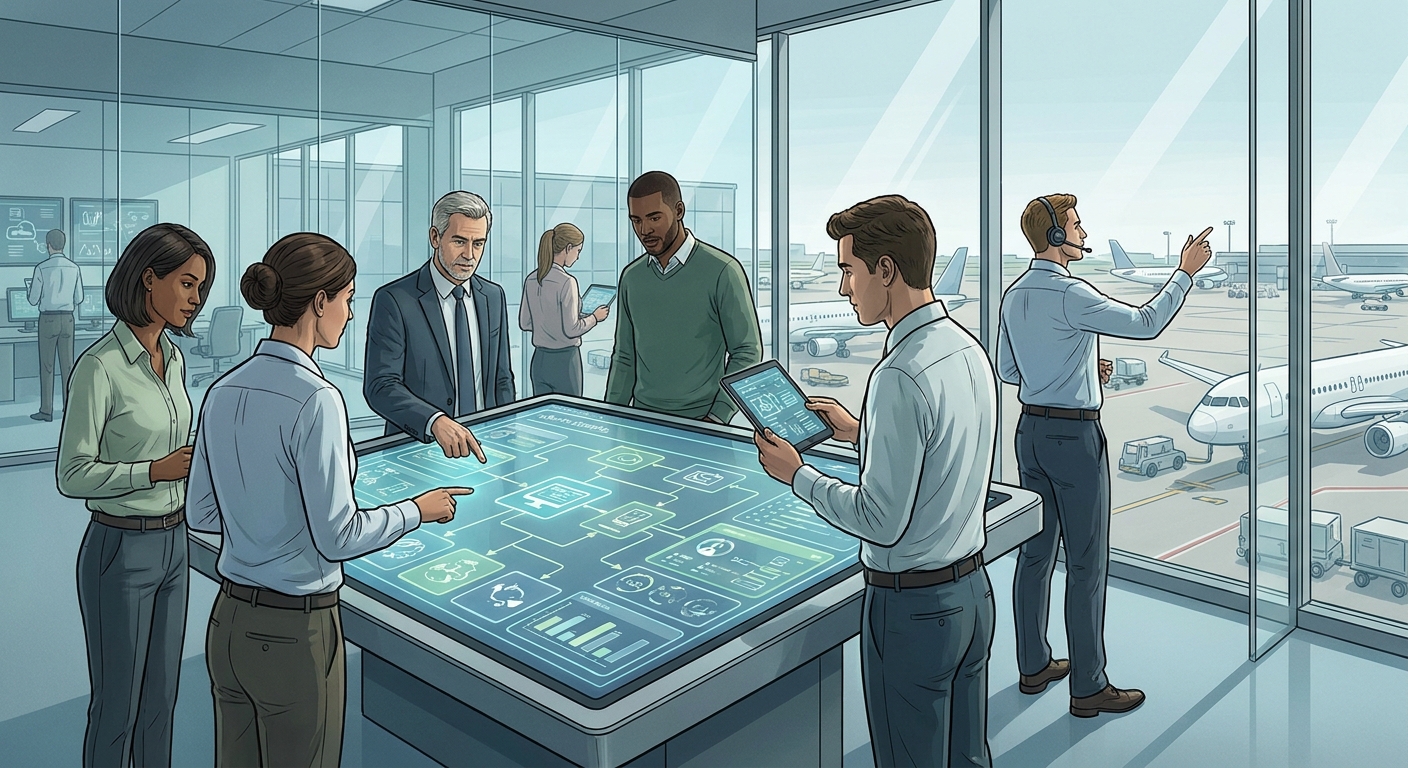
Delivery control and organisational adoption
PRINCE2
Provides governance discipline through clear roles, structured decision points, risk management, tolerances and continued business justification.
Prosci
Focuses on whether stakeholders are aware of the need for change, willing to support it, equipped with the right knowledge and able to perform in the new environment.
Together
The combination helps prevent a programme being technically complete but operationally unsuccessful because the organisation is not ready to adopt the change.
Making the people-side of change visible
Awareness — teams understand why the change is needed.
Desire — stakeholders support and engage with the change.
Knowledge — people receive the right information and training.
Ability — people can perform effectively in the new environment.
Reinforcement — new behaviours are sustained after go-live.
Operational Readiness is Pro-Tel’s application of adoption evidence to transition and assurance; it is not an additional ADKAR element.
People → Process → Technology → Construction
Pro-Tel places the operating need before the solution. Technology should support an agreed operating model rather than define it. The same logic applies to improvement: Standardise → Simplify → Automate.
In environments such as an Airport Operations Centre, this creates a stronger basis for decisions, stakeholder engagement, transition and benefits realisation.
Pro-Tel Services Ltd — Programme Management · Business Change · Operational Readiness · Airport Transformation